 Indian publishers, including those owned by Ambani & Adani, challenge privacy laws
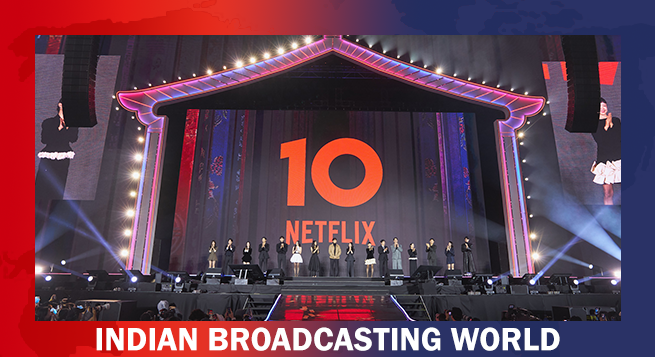 Netflix’s marks Korean decade as K-content rules non-English viewing
 GTPL Hathway now tracking TV viewership via RPD, targets 50k homes
 Netflix, hoichoi in pact to take Bengali stories to wider audiences
 JioHotstar to offer ‘Ramayana’ on pay-per-view after theatrical run
 Netflix ropes in former Apple exec Wilson to manage podcasts
 Guest Column: TRAI’s ALTD reccos a turning point for b’cast sector
 Ready-reckoner on why 21 news groups challenged India’s privacy laws
 AI adoption surges, but marketers demand accuracy: Nielsen new report
 Keanu Reeves to star in Netflix’s action-thriller ‘Maelstrom’




India’s television distribution industry is approaching an important transition. Cable television, Direct-to-Home (DTH), Headend-in-the-Sky (HITS) and IPTV platforms have traditionally provided viewers with linear television channels through established distribution networks.
However, the rapid growth of internet-connected televisions, streaming applications and Free Ad-Supported Streaming Television (FAST) services is changing how audiences access television content.
Recognising this changing environment, the Telecom Regulatory Authority of India (TRAI), in its recommendations dated 26 October 2026 on Application-Based Linear Television Distribution (ALTD) services, has addressed the emerging regulatory framework for linear television distributed through applications.
The recommendations are significant because they raise a fundamental question: how should India regulate television distribution when the same or similar viewing experience can be delivered through fundamentally different technologies and business models?
The eventual answer will have implications not only for cable operators and DTH platforms, but also for broadcasters, technology providers, smart-TV manufacturers, application developers, advertisers and consumers.
In my view, the future of television distribution must be technology-neutral: innovation should be encouraged, but comparable services should operate under fair, transparent and proportionate regulatory conditions.
Understanding ALTD & FAST Channels’ Growth: ALTD services represent an emerging model in which linear television channels are delivered through applications over internet-connected devices, including smart televisions, smartphones and web-based platforms.
Unlike conventional on-demand streaming, linear television retains a scheduled programming format in which viewers watch programmes according to a channel’s running schedule.
FAST services apply this model to channels that are generally offered without a direct subscription fee to the viewer and are monetised primarily through advertising.
This model has the potential to expand access to television content, create new opportunities for advertisers and enable content providers to reach audiences without relying exclusively on traditional distribution infrastructure.
However, the business model also creates regulatory questions like the following:
- Places where an application distributes established television channels, how should it comply with the conditions applicable to the content and distribution of those channels?
- Where a channel is created specifically for internet distribution, what registration and compliance requirements should apply?
TRAI’s recommendations seek to address these questions by distinguishing between the distribution of existing authorized television channels through applications and internet-native linear channels.
Regulatory Parity for Cable, DTH: For cable television and DTH operators, one of the most important implications of the ALTD framework is the need to ensure a level playing field.
Traditional distribution platforms operate within established regulatory arrangements and incur costs relating to infrastructure, compliance, consumer services and business operations.
ALTD applications may use internet connectivity and smart TV ecosystems to reach viewers through a different delivery mechanism.
The regulatory challenge is to determine which obligations should follow the television service itself and which should depend on the technology used to deliver it.
A technology-neutral framework should not automatically impose identical requirements on every platform.
Equally, differences in technology should not create avoidable regulatory advantages where services perform comparable functions and compete for the same viewers, channels or advertising revenue.
For cable operators and multi-system operators (MSOs), this is particularly relevant as they explore connected TV applications, hybrid distribution models and partnerships with internet-based platforms.
For DTH and HITS operators, the framework could influence future strategies for integrating conventional broadcasting with internet-delivered services.
The policy objective should be proportionate regulation that preserves fair competition while allowing different technologies to coexist.
Existing TV Channels & ALTD Applications: An important aspect of the recommendations concerns the distribution of existing television channels through ALTD applications.
The framework envisages arrangements under which authorised application providers can obtain feeds of permitted satellite or ground-broadcast television channels through appropriate interconnection agreements.
This could create additional distribution opportunities for broadcasters and provide viewers with alternative ways to access established channels. Nevertheless, the practical details will matter.
The industry will need clarity on the terms of interconnection, commercial arrangements, compliance responsibilities and the treatment of pay channels when they are offered through application-based platforms.
A particularly sensitive issue is the availability of pay television channels without a direct subscription charge through an application.
When a channel is monetised through advertising or bundled with other services, its commercial treatment may differ from that under conventional subscription-based distribution.
This raises questions about the relationship between existing tariff arrangements, broadcaster-distributor agreements and emerging internet-based models.
TRAI’s recommendations should, therefore, be seen as an important step towards defining the regulatory framework, rather than the final resolution of every commercial and interconnection issue.
Of Opportunities & Responsibilities: ALTD services may also carry linear channels created specifically for internet distribution rather than channels already authorised for conventional broadcasting.
The recommendations propose a registration framework for internet-native linear television channels, with restrictions relating to news and current affairs content and specified registration and annual fees.
The proposed arrangements also envisage a ten-year registration period, renewal requirements, an Indian-company agreement and compliance with the applicable Programme Code and Advertising Code of India.
These proposals could encourage the development of new channels focused on entertainment, lifestyle, education and specialised interests.
At the same time, the distinction between internet-native channels and existing authorised television channels will need to be implemented carefully.
The framework should make it clear who is responsible for registration, content compliance and adherence to the conditions governing distribution.
A transparent and predictable regime would help genuine content entrepreneurs enter the market while protecting the integrity of India’s broadcasting framework.
Smart TVs, OSs, Consumer Protection: Smart televisions and their operating systems are becoming increasingly important gateways to television content.
The prominence given to an application on a television’s home screen, the organisation of the electronic programme guide (EPG), search results and recommendations can influence which services viewers discover and use.
Consequently, the ALTD debate extends beyond broadcasters and distribution operators.
It also involves television manufacturers, operating system providers, application developers and other technology intermediaries.
The regulatory framework will need to establish appropriate responsibilities for ensuring that applications distributing regulated television channels meet applicable authorisation requirements.
It should also clarify the accountability of the entities involved in making such applications available to consumers.
Consumer protection is equally important. Viewers should have accessible grievance-redressal mechanisms.
As television consumption expands across connected devices, consumer protection should remain consistent in principle, while allowing practical differences in how complaints are handled across platforms.
Advertising, Revenue and Audience Measurement: FAST and other ALTD services offer new opportunities for advertising-led monetisation. Targeted advertising, digital campaign measurement and the ability to reach audiences across connected devices may attract advertisers seeking alternatives or complements to conventional television campaigns.
However, the growth of these services also raises questions about audience measurement and the transparency of reported viewership.
Reliable and comparable measurement is important for advertisers, broadcasters, distributors and content owners.
The recommendations address audience measurement and the publication of viewership information, including the use of anonymised data in periodic reporting.
The implementation framework should ensure that the data published is meaningful, privacy-conscious and sufficiently transparent to support informed commercial decisions.
It should avoid creating disproportionate compliance burdens for smaller service providers.
Opportunity for Cable Networks, DTH Ops: The emergence of ALTD and FAST services need not be viewed solely as a competitive threat to conventional distribution platforms. It can also encourage the industry to develop new services and business models.
Cable operators and MSOs have established relationships with local communities and experience in last-mile distribution and customer service.
DTH and HITS operators have built capabilities in large-scale television delivery. These strengths can be combined with application-based interfaces, connected-TV services and other hybrid offerings.
Potential opportunities include integrating linear television with internet-delivered content, offering consumers simpler access to multiple services, developing new advertising opportunities and strengthening relationships with broadcasters and technology partners.
However, these opportunities will depend on the commercial terms and regulatory conditions under which the different platforms operate.
If ALTD applications can distribute television channels under materially different conditions, conventional distribution operators may find it harder to compete on a sustainable basis.
Conversely, a proportionate framework could encourage partnerships and investment across the wider ecosystem.
The objective should not be to protect legacy technologies from competition. It should be to ensure that competition takes place on fair and transparent terms, while allowing innovation to flourish.
What the Industry Should Watch Next: TRAI’s recommendations are an important policy milestone, but their ultimate impact will depend on the authorisation framework adopted by the government and the subsequent implementation of the applicable provisions.
Several matters require particular attention:
- The precise scope of ALTD services.
- The distinction between existing authorised channels and internet-native channels.
- Interconnection and tariff arrangements.
- Compliance responsibilities, consumer grievance redressal.
- Audience measurement.
- Commercial treatment of advertising-supported services.
The industry should seek clarity on the responsibilities of smart TV manufacturers and operating-system providers, especially where applications are pre-installed, promoted or integrated into the television interface.
A Look-Ahead Framework: The ALTD recommendations mark an important stage in the evolution of India’s television distribution policy. They recognise that linear television is no longer confined to conventional cable, satellite or terrestrial delivery mechanisms.
For cable networks, DTH, HITS, broadcasters and technology companies, the emerging framework presents both opportunities and challenges.
It may enable new distribution partnerships and advertising-led services, but it also raises questions about regulatory parity, commercial sustainability and accountability.
The success of the framework will ultimately be measured by whether it encourages innovation without creating avoidable distortions in competition.
India needs a television distribution framework that is prepared for the future — one that protects consumer interests, supports investment, enables new business models and allows traditional and internet-based platforms to compete and collaborate on sustainable terms.
The objective should be a stronger, more innovative and more competitive broadcasting ecosystem, benefiting viewers and the entire media and entertainment industry.
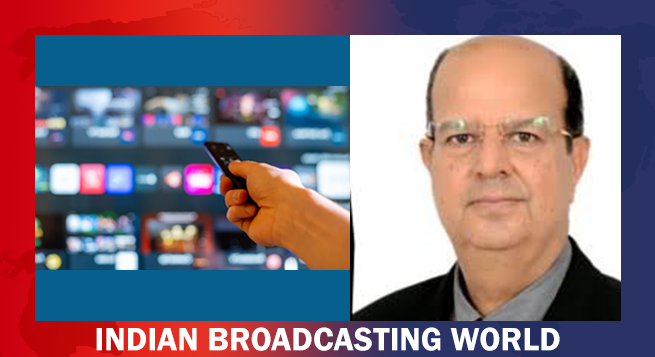
(The author Rajiv Khattar is a media professional with over 40 years of experience in sectors like cable TV, DTH, technology and satellite communications. The views expressed are those of the author and Indianbroadcastingworld.com need not necessarily subscribe to them)